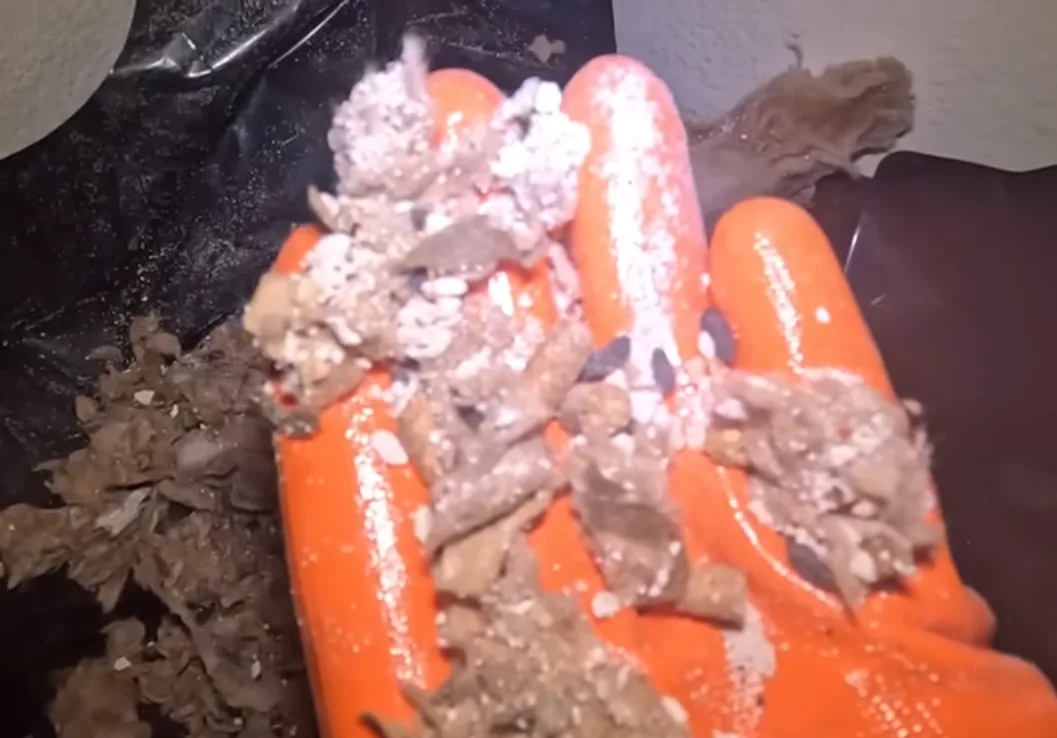
Rodent Killer's Rodent Droppings Cleanup in South Lake Tahoe starts with a free inspection — we identify the problem, trap what is inside, and seal the entry points. This page explains the safe method, where cleanup matters most, and when a job is small enough to do yourself versus when it should be ours.
Before you book, see what rodent control costs in South Lake Tahoe: inspection free, one-time removal from $199, full exclusion from $349.
Call (530) 203-0122 · Get Your Free Inspection
The One Rule: Never Dry-Sweep, Never Vacuum
Dry sweeping and standard vacuuming launch dried waste particles into the air — exactly the exposure route for hantavirus. It's the rule our crews work by on every job. If you've already swept some up before reading this, don't panic: risk from a single brief exposure is low. Just don't do it again, air the space out, and clean what remains the wet way. Hantavirus is the headline risk here, but droppings can also carry salmonella and leptospirosis, and house mouse droppings can carry LCM virus — another reason the wet method matters.
First, know what you're looking at — our rodent droppings identification guide helps you confirm it's rodent waste and which species left it. That ID matters: deer mouse contamination gets the full protocol below.
The Safe Wet-Cleaning Method
Whether it's our crew or you handling a small spot, the method is the same:
- Ventilate. Open windows and doors to the area for at least 30 minutes before starting, and keep people and pets out while you work.
- Gear up. Rubber or plastic gloves at minimum; for anything beyond a few pellets — attics, crawl spaces, nesting sites — a fit-tested respirator is the right call. Add eye protection and washable clothing — gloves and a respirator are the minimum, not the whole kit.
- Soak, don't sweep. Spray the droppings, urine stains, and nesting material with disinfectant (a bleach solution or an EPA-registered disinfectant) until thoroughly wet, and let it soak about 5 minutes. Check the label — the product must say 'disinfectant', not just cleaner or deodorizer — and follow the contact time on the label.
- Wipe and bag. Pick everything up with paper towels or disposable rags, seal it in a plastic bag, and put that bag in an outdoor trash bin — never the kitchen trash.
- Mop and disinfect the surface again after removal, and wash your hands thoroughly when the gloves come off.
- Dead rodents and nests get the same treatment: sprayed down, bagged, never handled bare-handed. If you're dealing with a carcass smell too, see our dead rodent removal page. Wear insect repellent on clothing, shoes, and hands when picking up dead rodents — the fleas leave the carcass and look for a new host. A trap you want to reuse goes into disinfectant for 5 minutes, then gets rinsed and dried completely.
Where Droppings Cleanup Matters Most in Tahoe Homes
- Attics — the classic deer mouse colony site; droppings worked into insulation across whole bays. Attic contamination at scale is professional work, often paired with insulation removal.
- Crawl spaces — droppings across the vapor barrier and in insulation; see our crawl space cleanup page for the full restoration picture.
- Kitchens and pantries — even a small number of pellets near food storage deserves the full wet method and a hard look at how they got in.
- Second homes at spring opening — a closed cabin that hosted mice all winter needs a deliberate clean before the family settles in, not a quick sweep by the first person through the door.
- Heating and cooling ducts — if rodents got into the ductwork, that is professional work. Do not clean ducts yourself.
- Vehicles — a car needs the same approach: air it out for 20 minutes, check the air intakes and cabin filter before starting, and disconnect the battery before touching any wiring.
- Outbuildings — sheds, barns, and cabins count too. On a dirt floor, mop or spray the area with disinfectant instead of sweeping.
When DIY Is Fine — and When It Isn't
Reasonable to DIY: a few fresh pellets in one open, ventilated spot, cleaned wet with gloves, as above.
Call us: droppings in insulation, an attic or crawl space with season-long accumulation, nesting material in quantity, any contamination in a home where someone is pregnant, elderly, or immunocompromised, or any mess large enough that you'd be guessing about the method. For a heavy infestation, the gear goes further — coveralls, rubber boots or shoe covers, protective goggles, and a half-mask HEPA respirator, fit-tested. If the contamination is that heavy, call us instead.
And remember: cleanup alone doesn't solve anything if the mice are still coming in. Cleanup is one step in a program — inspection, trapping, and exclusion and sealing backed by our 12-month exclusion warranty. And clean up only after the rodents are gone — trap and check daily until a week passes with no catches. Cleaning while mice are still active just contaminates the clean area again.
Pricing: inspection free, one-time removal from $199, removal plus full exclusion from $349, prevention plans $49–$59/month; larger cleanup scope is quoted in writing after the free inspection. The complete guide to rodent control in South Lake Tahoe covers the health picture in full.
Laundry, Food, and Stored Items After Mice
Cleanup, disinfection, and odor control do not stop at the floor — the things the mice touched need the same treatment.
Laundry. Wash contaminated clothing and bedding in hot water and dry on high heat, or dry in the sun. Carpets and upholstery get a steam cleaner or shampoo. Books and papers that cannot be washed can be left in the sun for hours, or sealed away for three weeks.
Food. Throw away anything in paper or plastic packaging that mice could reach — even if you cannot see a hole. Intact cans and sealed glass jars can be cleaned and kept; any damaged container gets discarded. No visible hole does not mean safe.
Stored items. Move contaminated boxes outside to a ventilated, sunlit area and stay upwind while you sort. Discard contaminated cardboard; plastic, glass, and metal containers can be disinfected and kept.
Appliances. Do not spray disinfectant into the electrical parts of a fridge or stove, and do not take appliances apart — if droppings are inside an appliance, get it serviced.
What Rodent Droppings Cleanup Costs in South Lake Tahoe
Small-area sanitizing is often folded into a service visit; larger cleanup is quoted after the free inspection. The prices below are the standard scheme.
| Service | Price | What You Get |
|---|---|---|
| Inspection | Free | Full property walkthrough — attic, crawlspace, garage, roofline, foundation. Written report with photos of every entry point. |
| One-Time Rodent Removal | Starting at $199 | Inspection + professional trapping + 2 follow-up visits to clear the house. |
| Removal + Full Exclusion | Starting at $349 | Trapping + sealing every entry point with rodent-proof materials. 12-month warranty on a protection plan. |
| Monthly Protection Plan | $49–$59/month | Regular visits, exterior bait stations, monitoring, free re-treatment if activity returns. |
| Attic Cleanup & Restoration | Custom quote | Contaminated insulation removal, commercial-grade sanitization, new insulation. |
What moves the price is the area involved — a room you can reach is quick work; attic or crawl space scale work, and insulation that has to come out, are quoted separately as attic cleanup. You'll have the written number before we start.
Rodent Droppings Cleanup FAQs
How serious is the hantavirus risk, really?▾
Serious but rare — and entirely manageable with the wet method. Most Tahoe homeowners will never face an exposure because most cleanups are small and done right. We talk about it plainly because the one dangerous move — dry sweeping a season of attic droppings — is exactly what people do when nobody warns them.
I already vacuumed droppings in my cabin. What now?▾
Air the space out well, wet-clean what remains, and consider a HEPA-filter vacuum only after surfaces are disinfected. For a one-time brief exposure, risk is low. If the vacuum job was a full attic of accumulated waste, call us.
Can I use my regular vacuum if it has a HEPA filter?▾
Not for the initial pickup — vacuuming still disturbs dry waste before filtration. Soak and hand-remove first; after disinfection, a HEPA vacuum can be used on the cleaned area if needed.
Does bleach smell mean it's clean?▾
The disinfectant step kills pathogens, but visible waste must be physically removed and surfaces cleaned for the job to count. We do both, and severely contaminated insulation comes out entirely — you can't disinfect your way through a soaked batt.
How much does professional droppings cleanup cost?▾
Small-area sanitizing is often folded into a service visit; attic or crawl space scale work is quoted after the free inspection, based on the area and insulation involved. You'll have the written number before we start.
What does a professional rodent clean up include?▾
A professional rodent clean up starts with the wet method — droppings soaked with disinfectant, never swept or vacuumed dry — then removal and double-bagging, disinfection of every surface, and, where the contamination is heavy, removal of soaked insulation with HEPA-filtered equipment. It ends with the part that makes it last: finding and sealing the entry points so the next mice never get in.
How do I book it?▾
Call (530) 203-0122 — same-day visits are available Monday–Saturday, 7 AM – 7 PM — or message us through the contact page. We're locally owned, with licensed, certified, background-checked technicians.
Droppings in the House? Clean Them the Safe Way. Call Rodent Killer.
Call (530) 203-0122 — free inspection, safe cleanup, and the sealing that keeps it from happening again.
Rodent Killer · 1665 Apache Ave, South Lake Tahoe, CA 96150 · (530) 203-0122