Rodent Control in South Lake Tahoe, CA — We Find Them, Trap Them, and Seal Them Out
Free inspections, honest pricing. Same-day rodent control for South Lake Tahoe homes.
Hearing scratching in your cabin at 2 AM? Droppings behind the water heater? Dark smudge marks along the baseboards that you figured were just dirt from ski season? That’s not dirt. Those are rub marks — oil from a rodent’s fur. It means they’ve been running the same path through your home every single night.
We come out the same day, find every entry point, trap what’s inside, and seal your home so nothing gets back in. That’s what we do. And we guarantee it.
Licensed by the California Structural Pest Control Board · Locally Owned · Same-Day Visits · Pet & Kid Safe
Why South Lake Tahoe Homes Get So Many Rodents
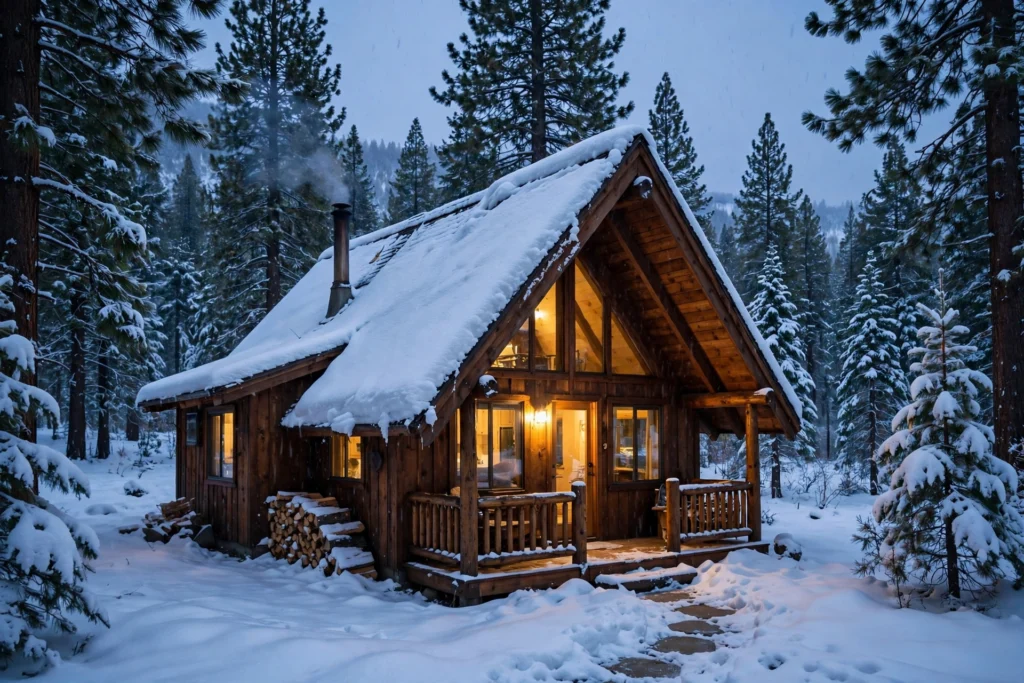
Here’s the thing about South Lake Tahoe — the town sits at 6,225 feet in the Sierra Nevada, ringed by lodgepole pine and Jeffrey pine forest. You’ve got the lake on one side, wild land on the other, and thousands of cabins and second homes in between. That’s prime rodent habitat. And when the first big snow hits — usually sometime in October — every mouse within half a mile is looking for a warm place to spend the winter. Your house is that warm place.
We’ve been under these cabins and inside these attics, and some neighborhoods get hit harder than others:
Tahoe Keys — canals, docks, and ground-floor living areas close to water. Norway rats are uncommon up here at 6,225 feet, but this is one of the few spots in town where they do show up. House mice run along the canal-side fences and get into garages through worn door seals. We check the door seals first on every Keys job.
Bijou Park and Al Tahoe — older cabins, lots of them on pier foundations. A cabin on piers is a mouse condo. There’s open space under the floor, vents that were chewed through years ago, and plumbing lines that were never sealed. Deer mice — the native mouse that’s everywhere in the Sierra — move in underneath and then up into the walls. We pull up to Bijou Park cabins and find droppings in the subfloor before we even open the attic hatch.
Highland Woods — bigger lots, wooded parcels, wood piles stacked right against the house. A wood pile against your siding is a mouse staircase. Deer mice nest in the pile all summer, then walk straight through the gap where the foundation meets the framing when the temperature drops. We see this constantly.
Stateline Residential — vacation rentals and second homes that sit empty for weeks or months at a time. Nobody’s around to hear the scratching. A mouse colony can build for an entire season before an owner opens the front door and finds droppings across the kitchen counters. High vacancy is one of the biggest rodent problems in South Lake Tahoe.
Heavenly Valley — slopeside homes and condos that get buried in snow from October through March. Snow piles up against garage doors and vents, warps the seals, and creates sheltered tunnels right up to the house. Mice travel under the snow — you don’t see them coming. We find chewed garage-door seals on almost every Heavenly Valley job.
Tahoe Island and Tahoe Valley — classic Tahoe A-frames and chalets with big open eaves, exposed beams, and gable vents that haven’t been touched in twenty years. Gable vents with torn screens are a wide-open door. Deer mice drop down from the eaves into the wall voids.
Sierra Tract — quiet residential streets with heavy tree cover. Deer mice come off the tree line in September and October, right when the first snow pushes them out of the forest floor. We get more calls from Sierra Tract in fall than anywhere else in town.
Bijou Pines — pine-shaded lots with homes that have attached garages used as storage. Garages are mouse magnets. Seed, dog food, old camping gear, cardboard boxes — it’s all nesting material and food. The gap under the garage door is usually the entry point.
Gardner Mountain — tucked into the trees with deep winter snow, quiet roads, and cabins that go dark from November to April. We opened one Gardner Mountain cabin in spring where mice had been running the whole kitchen for four months. The owner didn’t even know until they turned on the kitchen light.
So yeah — if you’re hearing scratching at night, you’re not imagining it. And you’re definitely not the only one in your neighborhood dealing with this.
What Actually Happens When You Call Rodent Killer
No guesswork. No “spray and pray.” Here’s exactly how we handle a rodent job in South Lake Tahoe, step by step.
Step 1 — We Inspect Your Entire Property (Free, Same Day or Next Day)
One of our technicians comes out and goes through everything. Attic, crawlspace, garage, roofline, foundation, dryer vents, AC line penetrations, plumbing entry points — all of it. We’re looking for droppings, rub marks, gnaw marks, nesting material, and every gap or hole that’s the size of a nickel or bigger. At 6,225 feet, your #1 rodent is the deer mouse, and a deer mouse can get through anything the size of a nickel.
Here’s what most people don’t realize — by the time you hear scratching in the walls, the problem’s been going on for a while. One mouse in your kitchen usually means there’s a colony nesting in your walls or attic. We need to find exactly where they’re getting in.
You get a written report with photos showing every entry point and every sign of activity. No surprises, no pressure — just straight answers about what’s going on in your house.
Step 2 — We Set Traps Where Mice Actually Travel
This is where experience matters. You can’t just throw a snap trap in the middle of the attic and hope for the best. That’s what DIY looks like, and that’s why it doesn’t work.
We place professional-grade snap traps along confirmed rodent travel paths. You can tell where they travel by the rub marks — dark, greasy smudge lines along walls and beams where the oil from their fur builds up over time. That’s where the traps go.
On the exterior, we use tamper-resistant bait stations. Locked boxes that kids and pets can’t open. No loose poison inside your house. Ever.
Most South Lake Tahoe homes see a big drop in activity within 7 to 14 days.
Step 3 — We Seal Every Entry Point (This Is the Part Most Companies Skip)
Here’s where Rodent Killer is different from the company that just sets traps and leaves.
Trapping gets rid of the mice that are inside your house right now. But if you don’t seal the entry points, new mice come in through the same gaps within weeks. That’s what happens when you hire a company that only does “rodent control” — they control the population, but they never actually solve the problem.
What we do is exclusion. We seal up your house so tight that nothing gets back in.
We use:
- Galvanized steel mesh over vents and weep holes
- Metal flashing around roofline gaps and eave joints
- Steel wool and construction-grade sealant for pipe and wire penetrations
- Hardware cloth over crawlspace openings and pier-foundation vents
- Cement around sewer lines and water line penetrations
A mouse can squeeze through a gap as small as a quarter inch — about the width of a pencil. We find and seal openings that small. Our guys go through the entire crawlspace and attic and look for everything — and I mean everything.
In South Lake Tahoe, the classic entry points are snow-specific. Heavy snow from October through March piles against your home, presses against vents and garage-door seals, and damages them. Spring melt reveals gaps you didn’t have in the fall. We check every vent and seal after snow season — that’s when a lot of entries open up.
Step 4 — We Clean Up the Mess They Left Behind
This part isn’t pretty, but it’s important.
Rodent droppings, urine, and nesting material carry bacteria and viruses — we’re talking Hantavirus, Salmonella, Leptospirosis. Deer mice are the #1 mouse in South Lake Tahoe, and deer mice are the main carrier of Hantavirus. You do not want those droppings sitting in your attic, and you should never sweep or vacuum them dry — that can push virus particles into the air. We handle cleanup the right way.
We remove contaminated insulation, sanitize the affected areas with commercial-grade disinfectant, and replace damaged materials. We’ve opened up attics in Highland Woods where the insulation was completely shredded — deer mice had been nesting in it all winter before the owner came back for the summer.
Step 5 — We Monitor and Guarantee It
After treatment, we check the bait stations and sealed entry points on a regular schedule. If any rodent activity comes back between visits, we come back and re-treat. No charge. That’s our Rodent-Free Guarantee.
We don’t disappear after the first visit. If you’ve got a problem, we’ve got you covered.
What Rodent Control Actually Costs in South Lake Tahoe
We’re not going to make you call just to find out the price. Here’s what our services look like:
| Service | Price | What You Get |
|---|---|---|
| Inspection | Free | Full property walkthrough, written report with photos, straight answers |
| One-Time Rodent Removal | Starting at $199 | Inspection + trapping + 2 follow-up visits to clear the house |
| Removal + Full Exclusion | Starting at $349 | Trapping + sealing every entry point on your home |
| Monthly Protection Plan | $49–$59/month | Regular visits, exterior bait stations, monitoring, free re-treatment |
| Attic Cleanup & Restoration | Custom quote | Insulation removal, sanitization, re-insulation |
*Your exact price depends on the size of your home, how bad the infestation is, and how many entry points we need to seal. We give you the real number after the free inspection — no bait-and-switch, no hidden fees.*
Why Store-Bought Traps and DIY Methods Don’t Work
Look, I get it. Your first instinct is to drive to the hardware store, buy some traps, and try to handle it yourself. Everybody does. But here’s why it almost never works — especially up here:
The Traps Sit There Untouched
Mice run along edges. They follow walls, beams, and pipes — the same path, every night. A snap trap dropped in the middle of the attic floor, or placed where a mouse never travels, will sit there untouched for weeks. Professional trap placement is based on reading the signs — droppings, rub marks, gnaw patterns — and placing traps directly in their travel path. That’s what makes the difference.
Poison Bait From the Store Creates Bigger Problems
Over-the-counter rat poison is a bad idea. Here’s what happens — the mouse eats the poison, then crawls into a wall void or under your insulation to die. Now you’ve got a dead mouse decomposing inside your house. The smell lasts weeks. In a vacation home that’s closed up for the winter, it’s unbearable by spring.
We use exterior tamper-resistant bait stations — locked boxes placed outside your home where only rodents can access them. No loose poison inside. No dead mice in your walls.
You’re Killing Mice But Not Fixing the Problem
This is the biggest one. You trap or poison the mice inside, but the holes are still there. New mice come in through the same gaps within a couple of weeks. In South Lake Tahoe, the first snowstorm sends a whole new wave of mice toward your house. If the gaps are open, you start the whole cycle over again.
Without exclusion — physically sealing every entry point — the problem comes back. Every time. That’s why most people who try DIY end up calling a professional anyway.
The Hantavirus Problem Makes DIY Cleanup Dangerous
Here’s the thing about deer mice. They’re the main carrier of Hantavirus, and the virus can survive in droppings, urine, and nesting material. Sweeping or vacuuming dry droppings can launch the virus into the air, where you breathe it in. That’s how people get sick.
If you find mouse droppings in your South Lake Tahoe home, don’t sweep them up dry. Wear a mask and gloves, wet everything down with disinfectant, and let it soak. Or just call us — we handle the cleanup with the right gear and the right disinfectant.
How to Tell If You Have Rodents in Your South Lake Tahoe Home
Not sure if you’ve actually got a problem? Here’s what to look for:
- Scratching or scurrying at night — especially in the attic or inside walls. Mice and rats are nocturnal. If you hear it after dark, that’s them. In the fall, the scratching usually starts within a week of the first real snow.
- Droppings — check along baseboards, in kitchen drawers, on garage shelves, and in the attic. Mouse droppings are about the size of a grain of rice, with pointed ends. Deer mouse droppings look the same. If you’re finding them, you’ve got activity.
- Rub marks — dark, greasy smudge lines along walls. That’s oil from their fur. They run the same path every night and the oil builds up. If you see those marks, rodents have been there for a while.
- Gnaw marks — on food packaging, wood trim, plastic containers, baseboards, even electrical wiring. Their teeth grow 4 to 5 inches per year. They have to chew constantly to keep them filed down. That’s not a choice — it’s survival. If they don’t gnaw, their teeth grow back into their skull and kill them.
- Nesting material — shredded insulation, paper, fabric, plant matter stuffed into corners and hidden spaces. In mountain cabins, we often find nests made from shredded camping gear and stored clothing.
- A musty, ammonia smell — concentrated urine in enclosed spaces like attics and crawlspaces. In a second home that’s been closed up for months, this can hit you the second you open the door.
- Your dog or cat fixating on a wall or ceiling — animals hear and smell things you can’t. If your dog keeps staring at the same spot, there’s probably something behind it.
If you’re seeing any of these signs, don’t wait. One pair of mice can produce 60+ offspring in a year. Gestation is only about 3 weeks. A small problem turns into a full infestation fast — and in a second home, nobody’s watching while it happens.
Call us at (XXX) XXX-XXXX — we’ll come out and take a look. The inspection is free.
The Rodents We Actually Deal With in South Lake Tahoe
Not every town has the same rodents. Up here at 6,225 feet, the lineup is different from the valley. Here’s the honest breakdown.
Deer Mice — The #1 Rodent in South Lake Tahoe
These are the ones we see the most. Deer mice are native to the Sierra Nevada — they’re everywhere out here. Tan or brown back, white belly, big ears, bi-colored tail. They live in the forest, in your wood pile, under your deck, and — when the snow flies — inside your walls.
Here’s what you need to know: deer mice are the main carrier of Hantavirus. Their droppings and urine can carry the virus. That’s why we treat every deer mouse job as a health job, not just a nuisance job. Droppings get handled with masks, gloves, and disinfectant. Always.
They nest in attics, wall voids, garages, and under pier-foundation cabins. You’ll hear light scratching at night, usually in the walls or ceiling. One pair can produce 60+ offspring in a year, and those babies can breed at 6 weeks old. So that “one mouse” in the kitchen? It’s not one mouse.
House Mice
The smallest and most common indoor mouse. A house mouse can squeeze through a gap as small as a quarter inch — about the width of a pencil. They nest inside walls, behind appliances, and in cluttered garages. In South Lake Tahoe, they love garages: seed bags, pet food, old sleeping bags, cardboard boxes. It’s all food and nesting material.
House mice are active year-round, but the calls spike in September and October when the first cold snap pushes them indoors.
Norway Rats — Uncommon, But Possible Near Water
Let’s be straight about rats. At 6,225 feet, rats are not the big problem here. Norway rats are heavier, ground-dwelling rats that burrow. They’re uncommon in South Lake Tahoe, but they do show up near the lake shoreline and around the Tahoe Keys canals — anywhere there’s steady water and cover.
If you’re on the ground floor near the water and you’re finding large droppings, burrow holes along the foundation, or you hear heavy movement in the crawlspace — that’s worth a professional ID. Don’t guess. Misidentifying the species means using the wrong approach.
Roof Rats — Rare at This Elevation. Let’s Be Clear About It.
If you hear scratching at night in South Lake Tahoe, it is almost never roof rats. Roof rats live in coastal areas, the valley, and the lower Sierra foothills — places with mild winters, fruit trees, and year-round food. They do not do well at 6,225 feet with heavy snow and months of freezing temperatures.
Some pest companies will tell you you’ve got roof rats because it sounds scarier and the bill gets bigger. We won’t. Nine times out of ten, that “rat” you’re hearing is a deer mouse or a house mouse. We identify the species during the free inspection so the treatment actually matches the problem.
The Damage Rodents Actually Cause
This isn’t just about droppings and noises. Rodents destroy houses. Here’s what we find on jobs in South Lake Tahoe:
Chewed electrical wiring — this is the big one. Mice strip the insulation off wires in your attic and walls. Exposed wires can arc and ignite the insulation and wood framing around them. Rodent damage to electrical wiring is one of the leading causes of unexplained house fires in California. In a cabin that’s vacant all winter, a slow smolder from a chewed wire can go unnoticed for months. If you hear mice in your attic, this is why it’s urgent.
Damaged heating ducts and insulation — they tear into flexible ducts for nesting material. Now you’ve got contaminated air blowing through your house and your furnace running less efficiently. In winter at 6,225 feet, you need that heat. Mice nesting in the ductwork is also why some cabins smell like urine every time the heat kicks on.
Destroyed attic insulation — compressed, soiled, torn apart for nesting. Once mice have been through your insulation, it’s done. You’re losing heat all winter because that insulation has zero R-value left. With Tahoe heating bills, that’s real money.
Chewed PEX and PVC plumbing — mice gnaw through plastic water lines. We’ve seen jobs where a slow leak from a chewed pipe dripped for months in a vacant second home. By spring, there was water damage and mold. A mouse chew became a five-figure repair.
Contaminated food and surfaces — droppings, urine, and hair on pantry shelves, countertops, pet food bags. In a cabin you only visit a few times a year, mice can contaminate an entire kitchen between visits.
Chewed wiring in parked vehicles — this one’s specific to mountain towns. Mice nest under the hood and chew wiring. If your car sits in the driveway or garage for weeks at a time, pop the hood and look for nesting material and droppings before you start it.
The Rodent Killer Guarantee
If rodent activity comes back between your scheduled visits, we come back and re-treat your South Lake Tahoe home at no cost. Period.
Our exclusion work — every entry point we seal — is backed by a 12-month warranty when you’re on a regular prevention plan. If rodents get back in through anything we sealed, we fix it. Free.
No fine print. No excuses. If they come back, so do we.
About Rodent Killer
Rodent Killer is locally owned and operated, serving South Lake Tahoe, CA. We’re not a franchise. We don’t read off a corporate script. Our technicians live and work in this community — they know which neighborhoods have the worst rodent pressure because they’ve been in those attics and crawlspaces hundreds of times.
We only do rodents. Not ants. Not spiders. Not termites. Every hour of training and every tool in the truck is about one thing: getting rodents out of your house and making sure they can’t get back in.
Every technician on our team is:
- Licensed by the California Structural Pest Control Board
- Trained in Integrated Pest Management (IPM)
- Background checked and insured
- Experienced with deer mice, house mice, and the specific entry points common to Sierra Nevada homes
*[owner info to come]*
Areas We Serve
Our primary service area is South Lake Tahoe, CA 96150. Dedicated pages for our top neighborhoods:
- Tahoe Keys
- Tahoe Island
- Gardner Mountain
- Tahoe Valley
- Highland Woods
- Sierra Tract
- Al Tahoe
- Bijou Pines
- Heavenly Valley
- Bijou Park
- Stateline Residential
- Lakeside Park
- Winnemucca
- Bonanza
- Pioneer Village
We also serve Barton, Airport, Rancho Bijou, Bijou Acres, and Tahoe Meadows — see our service area page for the full list.
*We also hear from homeowners in surrounding Lake Tahoe basin communities — Zephyr Cove NV, Glenbrook NV, Incline Village, and Truckee. Our regular service area is South Lake Tahoe, California.*
Rodent Control FAQs — South Lake Tahoe, CA
How much does rodent control cost in South Lake Tahoe?
One-time rodent removal starts at $199 — that includes the inspection, trapping, and two follow-up visits. If you want full exclusion (sealing all entry points), that starts at $349. Monthly protection plans run $49 to $59 a month. Your final price depends on how big your house is, how bad the infestation is, and how many gaps we need to seal. We give you the exact number after the free inspection. No guessing.
How fast can you get to my house?
Same day or next day for most South Lake Tahoe appointments. If you call before noon, we can usually be there that afternoon. If you’ve got rodents running across your kitchen or you’re hearing them in living areas, we prioritize those calls.
What rodents are common in South Lake Tahoe at 6,225 feet?
Deer mice are #1 — native to the Sierra, abundant, and the main carrier of Hantavirus. House mice are common around homes and garages. Norway rats are uncommon but possible near the lake shoreline and the Tahoe Keys canals. Roof rats are rare at this elevation — they live in coastal areas, valleys, and lower Sierra foothills. If you’re hearing scratching at night in South Lake Tahoe, it’s almost always deer mice or house mice, not rats.
Are your treatments safe around kids and pets?
Yes. We use tamper-resistant bait stations on the exterior — locked boxes that kids, dogs, and cats can’t open. Inside your home, we use snap traps placed in secured locations — attics, wall voids, behind appliances. We never put loose poison bait inside a house. Not a chance.
What if the rodents come back after treatment?
We come back and handle it. No charge. That’s our guarantee. And if you’re on a monthly plan, the exclusion work is warrantied for 12 months. If mice re-enter through any point we sealed, we fix it free.
How long does it take to get rid of the mice?
Most homeowners notice a big difference within 7 to 14 days. Full elimination — trapping, monitoring, and exclusion — usually takes 2 to 4 weeks depending on the severity. Really bad infestations, like a second home that’s been vacant all winter? Could take up to 60 days. But we’re making headway from day one.
And look — if your pest control company has been coming out for months and the problem still isn’t solved, something’s wrong. You should be seeing real progress within 30 days. If not, it’s time to re-evaluate.
Do I have roof rats? I heard scratching in my attic.
Probably not. That’s the honest answer. Roof rats are rare at 6,225 feet. Nine times out of ten, scratching in a South Lake Tahoe attic or wall is deer mice or house mice. We identify the exact species during the free inspection — because the treatment approach depends on what you’re actually dealing with.
Is it safe to clean up mouse droppings myself?
Handle them with care. Deer mice — the most common mouse up here — carry Hantavirus, and the virus can be in droppings, urine, and nesting material. Never sweep or vacuum droppings dry; that can push virus particles into the air. Wear a mask and gloves, soak everything with disinfectant, let it sit, then wipe it up. Or call us — we do the cleanup with the right protective gear and commercial-grade disinfectant.
My cabin is a second home and sits empty for months. What should I do?
That’s one of the highest-risk situations in South Lake Tahoe. Mice move in during the first snowstorm and breed all winter while nobody’s watching. By spring, a small problem is a full infestation. Our recommendation: get a full exclusion (sealing every entry point) before winter, and consider the monthly protection plan so someone is checking the property on a schedule. We also offer pre-winter inspections for second homeowners.
Do you just set traps, or do you actually seal the house?
Both. But here’s the thing — trapping without exclusion is like bailing water out of a boat with a hole in it. You catch the ones that are inside, but new ones keep coming in through the same gaps. We seal every entry point with steel mesh, metal flashing, steel wool, and sealant. That’s the part that actually solves the problem long-term. Most companies skip it because it takes more time and expertise. We don’t skip it.
Can I just buy traps from the hardware store?
You can try. But store-bought traps in the wrong spot sit untouched for weeks. Professional placement is based on reading the signs — droppings, rub marks, gnaw patterns — and putting traps directly in their travel path. That’s what makes trapping effective. And even if you do catch a few, without sealing the entry points, more show up within weeks. Up here, the first snowstorm sends a whole new wave of mice toward your house.
Do rodents really cause house fires?
Yes. And this one’s serious. Rodents chew on electrical wiring because they have to — their teeth grow 4 to 5 inches per year and they need to gnaw constantly to file them down. When they strip the insulation off a wire in your attic, that exposed wire can arc and ignite the wood and insulation around it. It’s one of the leading causes of unexplained house fires in California. In a cabin that’s vacant all winter, nobody’s around to catch it early. That’s why if you hear mice in your attic, you should get an inspection done sooner rather than later.
Stop Living With Rodents. Call Rodent Killer Today.
We’ll come out to your South Lake Tahoe home, inspect it for free, show you exactly where the problem is, and tell you what it costs to fix it. No pressure, no run-around — just straight answers.
Licensed · Insured · Locally Owned · Rodent-Free Guarantee